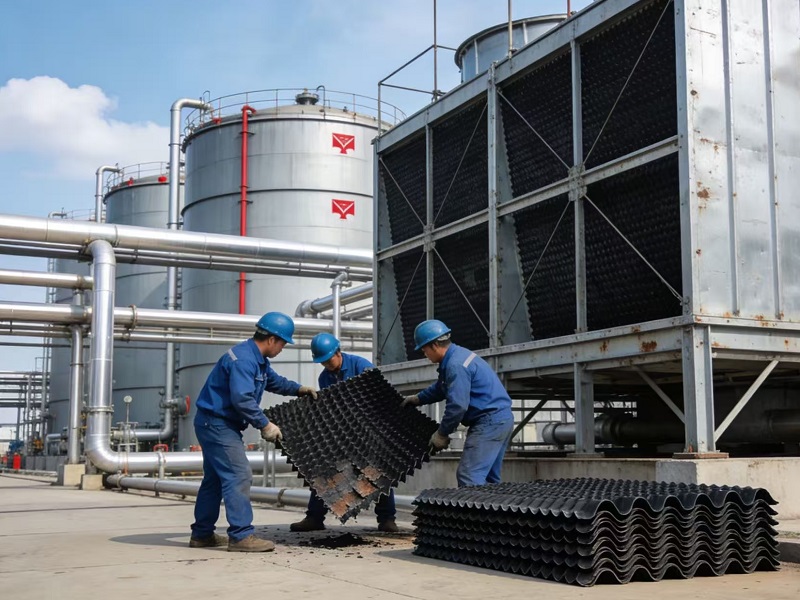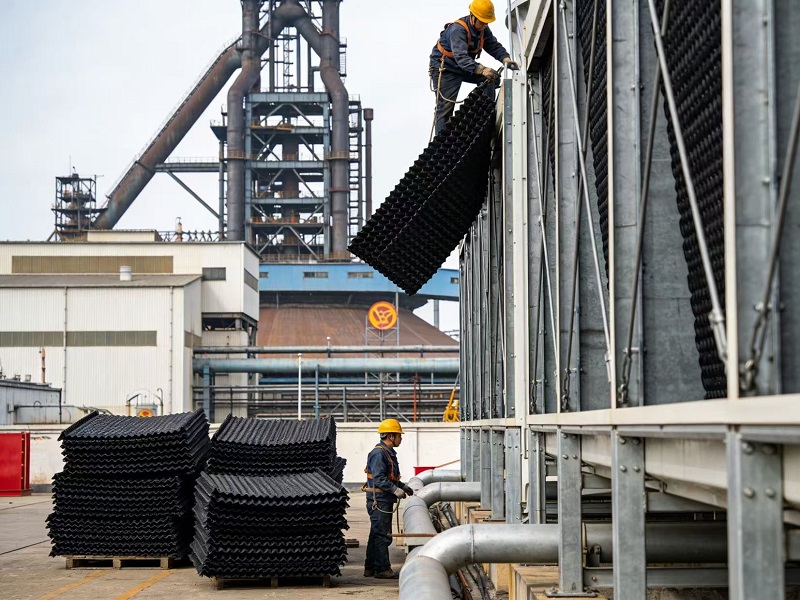
In many industrial plants, cooling tower performance does not suddenly fail. Instead, efficiency usually decreases slowly as internal components age. One of the most important parts that affects long-term cooling performance is Cooling Fill.
Many engineers and purchasing teams only consider replacement when cooling capacity has already dropped significantly. However, identifying early warning signs can help avoid emergency shutdowns, reduce maintenance costs, and maintain stable production.
For customers in Southeast Asia, the Middle East, and Japan Korea industrial markets, cooling systems often operate under high temperatures, long running hours, and changing water conditions. These environments make regular inspection of Cooling Tower Media especially important.
Cooling Tower Media is the main heat exchange component inside a cooling tower. It increases the contact area between water and air, allowing heat to be removed efficiently through evaporation.
Over years of operation, tower fill can experience physical damage, chemical aging, scaling, and biological blockage. These problems gradually reduce heat transfer performance.
A proper replacement strategy helps maintain:
The most obvious sign is that the cooling tower cannot achieve the designed outlet water temperature.
When Cooling Tower Fill loses surface effectiveness, the water and air contact process becomes less efficient. The system may continue running, but cooling performance gradually decreases.
Cracks, deformation, collapse, and broken structures indicate that the physical condition of cooling tower infill has deteriorated.
Damaged fill cannot maintain the original airflow and water distribution pattern, which directly affects heat transfer.
If operators need to clean Cooling Tower Media more frequently than before, it may indicate that the material has reached the end of its practical service life.
Blocked passages inside tower fill increase airflow resistance. Fans may need more power to maintain the required air volume.
Film Fill is commonly selected for high-efficiency cooling applications. During replacement, engineers usually evaluate water quality, temperature conditions, and airflow requirements.
For clean water systems, Film Fill can provide excellent heat transfer performance.
Splash fill is often considered when the circulating water contains more suspended solids or impurities.
Its open structure provides better resistance to blockage in challenging operating environments.
Corrugated Fill improves turbulence and increases air-water contact through specially designed wave structures.
It is widely used in industrial cooling systems where stable performance and efficient heat transfer are both required.
CrossFluted Fill provides a balanced solution between efficiency and airflow resistance.
Many industrial users choose this type when upgrading old cooling systems because it can improve performance without major structural changes.
PVC film fill remains one of the most commonly used materials because of its good heat transfer ability and economical cost.
It is suitable for many standard industrial applications where temperature and chemical exposure are within normal ranges.
PP fill media provides improved resistance against higher temperatures and chemical environments.
For industries operating under more demanding conditions, PP materials can provide longer-term stability.
There is no fixed replacement period for every cooling tower. The actual service life depends on operating conditions.
Engineers usually evaluate several factors:
A cooling tower operating with clean water may have a longer service period, while systems using industrial wastewater may require earlier inspection.
In real projects, replacement is not always the first solution. Proper maintenance can significantly extend the working life of tower fill.
Related water management components can also influence system performance:
A factory found that the cooling tower could no longer maintain the required temperature during peak production periods. Inspection showed severe scaling on old fill sheets. After replacing the aging Cooling Tower Media and improving water treatment, cooling efficiency increased by around 15**.
A chemical plant operating under high ambient temperatures experienced rapid aging of traditional fill materials. After changing to a more suitable PP fill media solution, the system showed better stability during continuous operation.
An industrial facility using recycled water faced frequent blockage problems. The previous tower fill design was not suitable for the water condition. After selecting a more appropriate structure and improving filtration, maintenance intervals became longer.
When selecting a replacement supplier, price should not be the only factor. A suitable solution should match the actual working environment.
Engineers should consider:
Working with an experienced cooling tower fill supplier can help avoid incorrect selection and unnecessary replacement costs.
Replacing Cooling Tower Fill at the right time helps maintain cooling efficiency, reduce energy waste, and prevent unexpected production problems.
For industrial users searching for a cooling tower fill replacement supplier or planning a cooling tower infill upgrade, the best approach is to evaluate actual operating conditions instead of replacing based only on years of service.
The replacement cycle depends on water quality, temperature, operation hours, and maintenance conditions.
Reduced cooling performance, visible damage, blockage, and increased pressure drop are common signs.
Yes. Proper cleaning and water treatment can delay replacement.
PP offers better resistance in demanding environments, while PVC is suitable for many standard applications.
The choice depends on water quality, temperature, cooling requirements, and operating conditions.
This article is written from the perspective of an industrial cooling system engineer with more than 10 years of experience in Cooling Tower Fill selection, replacement projects, heat transfer optimization, and cooling system troubleshooting for global industrial applications.
Precision design for efficient heat exchange. Improves cooling efficiency and reduces operating energy consumption.
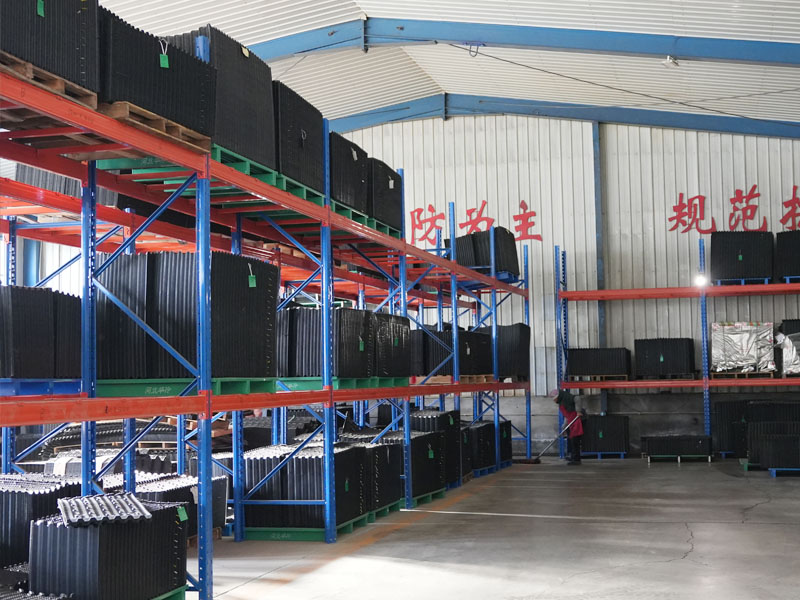
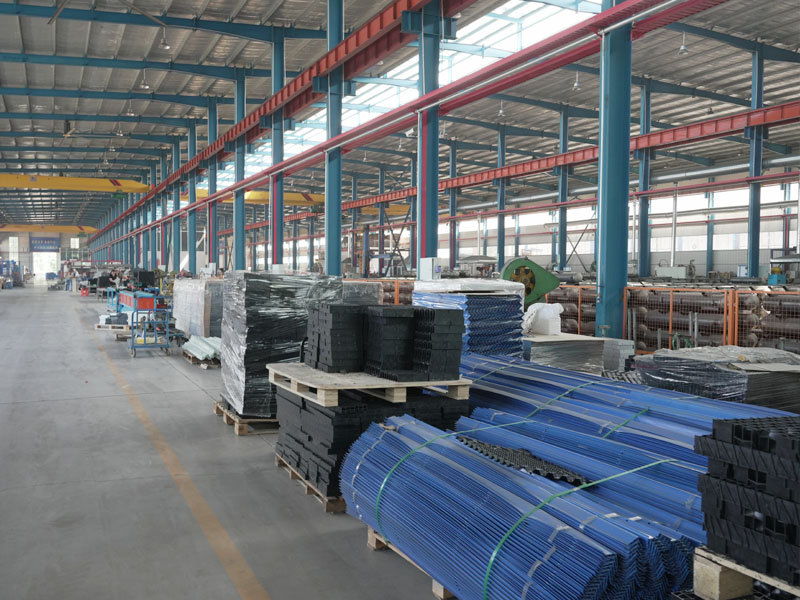
We have a large supermarket stock of cooling tower packing materials, with a variety of product specifications.
Provide customized cooling tower packing solutions to accurately match the needs of different brands of cooling tower projects.
Our experienced team provides comprehensive technical support to ensure timely and high-quality delivery of cooling tower packing orders.

The cooling tower fill from this supplier has significantly improved our system's efficiency. Installation was straightforward, and we've noticed a consistent temperature drop since switching to their product.
Plant Manager

Durability was our main concern, and this fill material has held up exceptionally well even in harsh conditions. It has reduced our maintenance cycles and downtime.
Operations Director

We needed a drop-in replacement for an older system. Their technical support helped us select the right fill, and the performance has exceeded our expectations.
Facilities Engineer

The fill blocks arrived well-packed and were easy to install. Our cooling tower now runs more quietly and with better heat dissipation.
Maintenance Supervisor

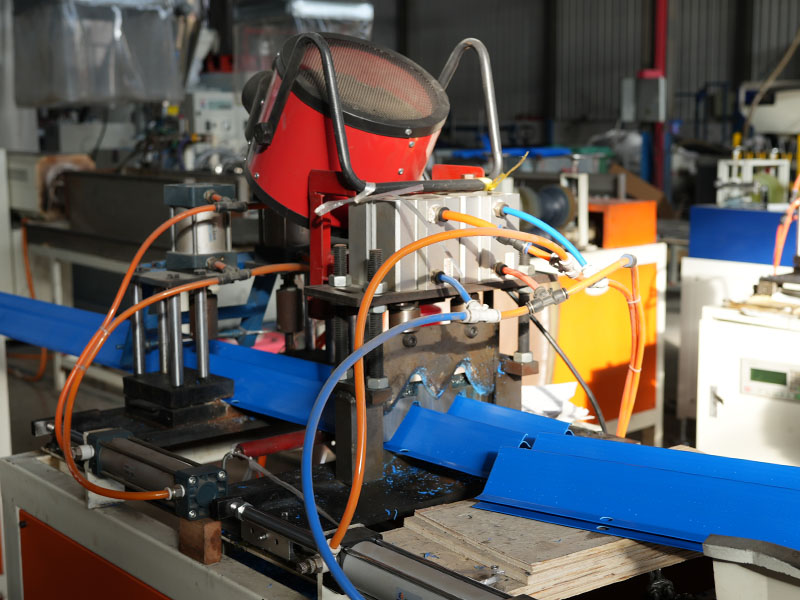
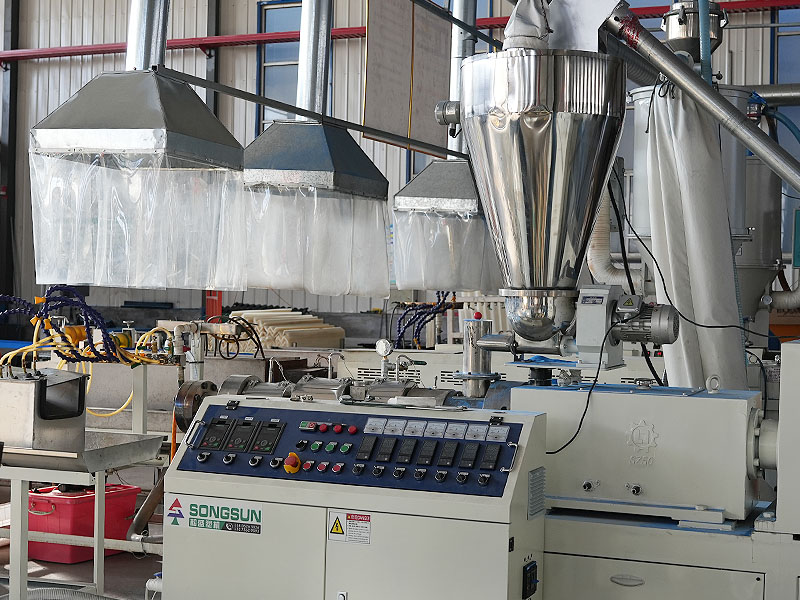
Hi friend, there is a cooling tower packing processing factory here, which has various specifications of cooling tower packing and can also be customized according to your requirements. Are you sure you don't want to come and take a look
Copyright © 2026.Company cooling tower fill factory All rights reserved.