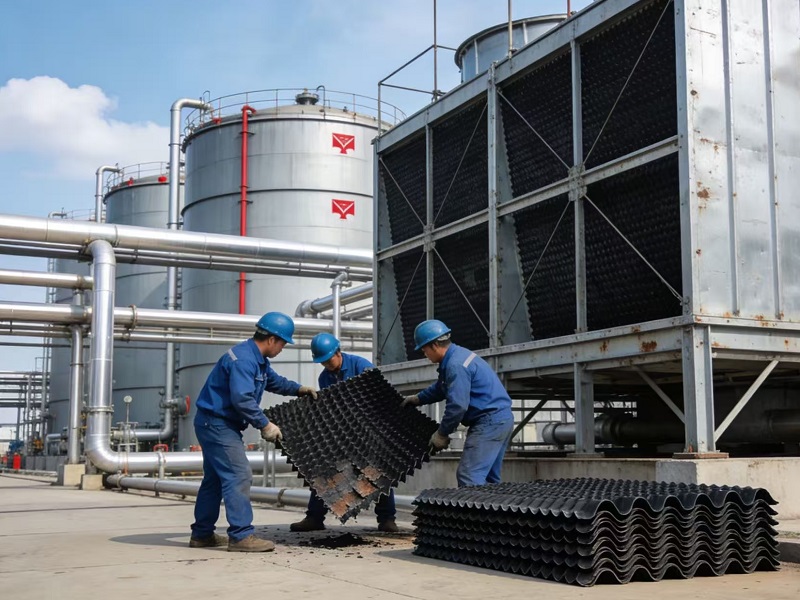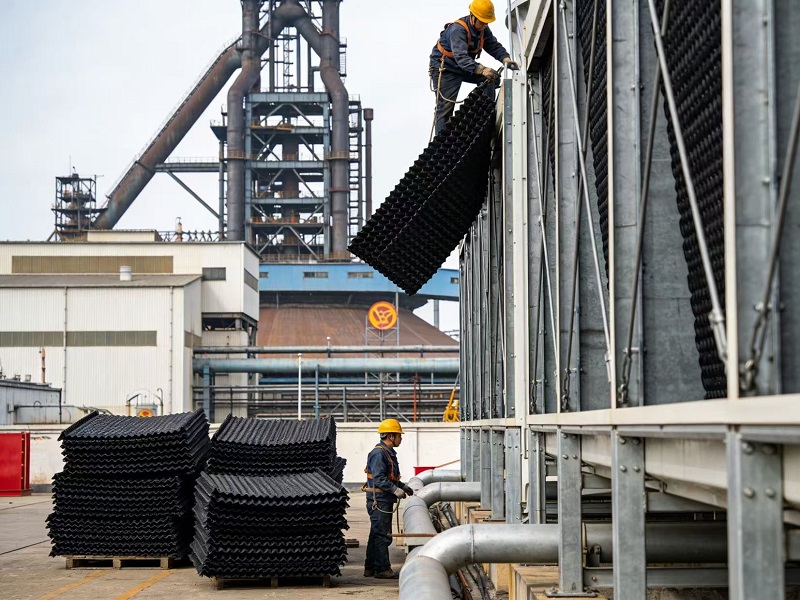
Choosing the right cooling tower fill media is an important decision for industrial cooling system design. Different industries have different operating conditions, water quality requirements, and cooling performance targets. Because of this, the same fill solution may not always work well for every application.
Some cooling tower users focus mainly on initial cost, while experienced engineers usually consider a wider range of factors, including heat transfer performance, airflow resistance, maintenance requirements, material stability, and service life.
A suitable cooling tower fill should match the actual operating environment of the cooling tower instead of simply choosing a standard product.
This article compares different types of cooling tower fill media and explains how engineers select suitable solutions for different industrial applications.
Cooling tower fill media is designed to increase the contact area between water and air. By creating a larger heat exchange surface, fill media improves the evaporation process and helps reduce water temperature.
The main types of cooling tower fill include:
Each type has different characteristics and application areas.
The selection depends on:
Film Fill is one of the most commonly used cooling tower fill technologies today. It uses specially designed plastic sheets with surface patterns that allow water to spread into thin layers.
The thin water film creates a large contact area between water and air, improving heat transfer efficiency.
A properly selected film fill cooling tower solution is widely used in many industrial and commercial applications.
Film Fill is often used in:
However, because Film Fill has a relatively compact structure, water quality should be carefully considered before selection.
Splash fill works differently from Film Fill. Instead of creating a thin water film, splash fill breaks water droplets into smaller pieces through repeated impact.
This creates more contact between water and air while maintaining a more open structure.
Splash fill is often considered for:
The trade-off is that splash fill may provide different heat transfer performance compared with compact Film Fill designs.
When comparing Film Fill and splash fill, there is no universal answer about which one is better. The correct choice depends on the project conditions.
| Comparison Factor | Film Fill | Splash Fill |
|---|---|---|
| Heat transfer efficiency | Usually higher in suitable water conditions | Suitable for applications requiring open structures |
| Blockage resistance | Requires better water quality management | Generally more tolerant of suspended solids |
| Maintenance requirement | Needs proper cleaning and water treatment | May be easier for difficult water conditions |
| Typical applications | HVAC and industrial systems | Heavy industrial applications |
Besides fill structure, material selection is another important factor affecting cooling tower performance.
PVC and PP are two commonly used materials for cooling tower fill media.
PVC cooling tower fill is widely used because it provides stable performance in many standard applications.
Common advantages include:
PVC fill is commonly selected for:
PP material is often selected for more demanding operating environments.
Potential advantages include:
PP cooling tower fill media is often considered for:
Power plants usually require cooling systems that operate continuously for long periods.
Important factors include:
The selected fill media should support continuous cooling performance under demanding conditions.
Chemical plants often have complex water conditions.
Engineers usually focus on:
The correct material selection is especially important in chemical applications.
Commercial HVAC systems usually focus on efficiency, stability, and maintenance convenience.
Film Fill is commonly used because it provides effective heat transfer in relatively clean water systems.
Manufacturing facilities have different cooling requirements depending on production processes.
Selection factors may include:
Many countries in Southeast Asia operate cooling towers under hot and humid conditions.
These environments require attention to:
A suitable cooling tower packing solution helps maintain stable performance in tropical climates.
Cooling towers in the Middle East often face high ambient temperatures and strong cooling demand.
Important considerations include:
The right fill material and structure help cooling systems operate effectively under challenging conditions.
Cooling tower fill is a key component, but the overall system performance also depends on other internal parts.
Airflow has a direct relationship with cooling efficiency.
A suitable Air intake grille helps maintain stable air entry and protects the internal cooling tower structure.
Reducing water loss is becoming more important for many industrial users.
A properly designed Water Collector helps control water droplets leaving the cooling tower.
The lowest initial price does not always mean the best solution.
A cheaper fill product may create higher maintenance costs if it does not match the application.
Water condition is one of the most important factors affecting fill performance.
Ignoring water quality may lead to blockage, scaling, and reduced efficiency.
Different industries have different requirements.
A cooling tower fill solution should be selected according to actual operating conditions.
Cooling tower fill media selection requires a balance between heat transfer performance, operating conditions, maintenance needs, and material characteristics.
Film Fill, splash fill, PVC fill, and PP fill each have their own suitable applications. The best solution depends on the specific requirements of the cooling system.
By selecting the right tower fill solution, industrial users can improve cooling reliability and create a more stable operation environment.
A successful cooling tower project is not about choosing the most advanced product. It is about choosing the right product for the right application.
Precision design for efficient heat exchange. Improves cooling efficiency and reduces operating energy consumption.
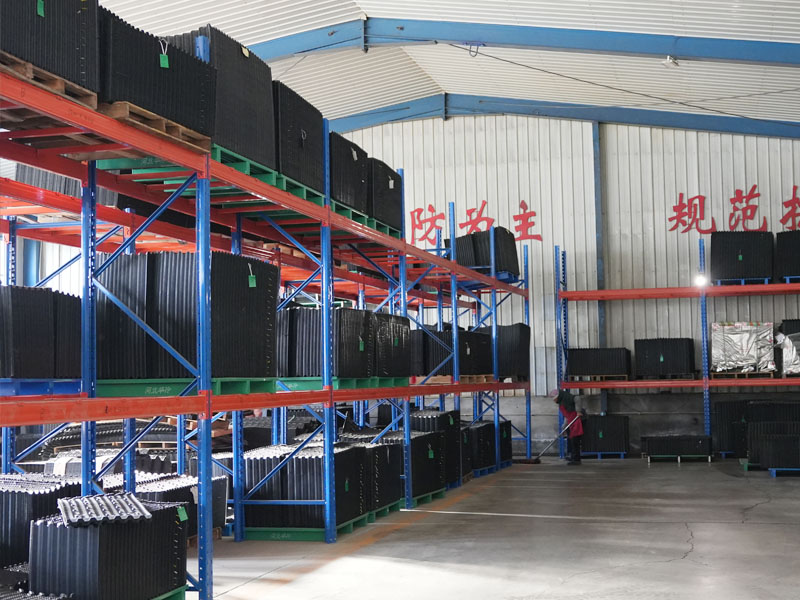
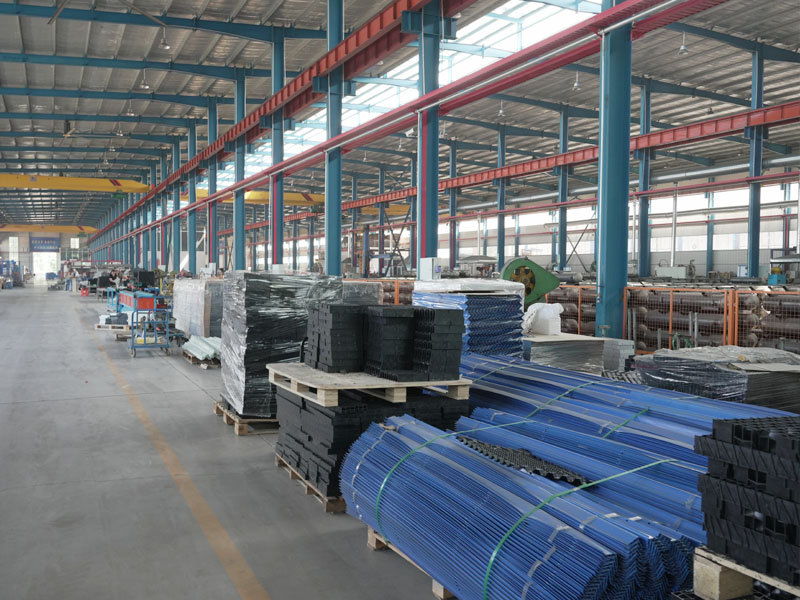
We have a large supermarket stock of cooling tower packing materials, with a variety of product specifications.
Provide customized cooling tower packing solutions to accurately match the needs of different brands of cooling tower projects.
Our experienced team provides comprehensive technical support to ensure timely and high-quality delivery of cooling tower packing orders.

The cooling tower fill from this supplier has significantly improved our system's efficiency. Installation was straightforward, and we've noticed a consistent temperature drop since switching to their product.
Plant Manager

Durability was our main concern, and this fill material has held up exceptionally well even in harsh conditions. It has reduced our maintenance cycles and downtime.
Operations Director

We needed a drop-in replacement for an older system. Their technical support helped us select the right fill, and the performance has exceeded our expectations.
Facilities Engineer

The fill blocks arrived well-packed and were easy to install. Our cooling tower now runs more quietly and with better heat dissipation.
Maintenance Supervisor

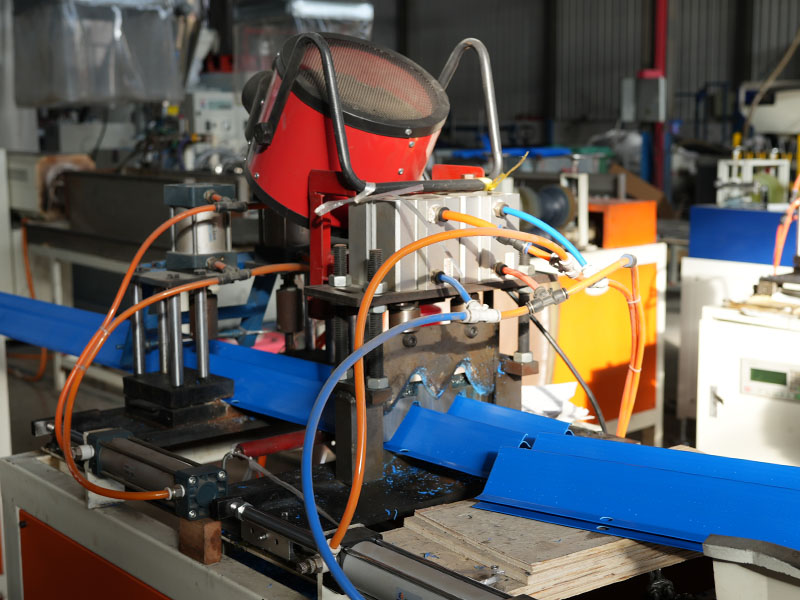
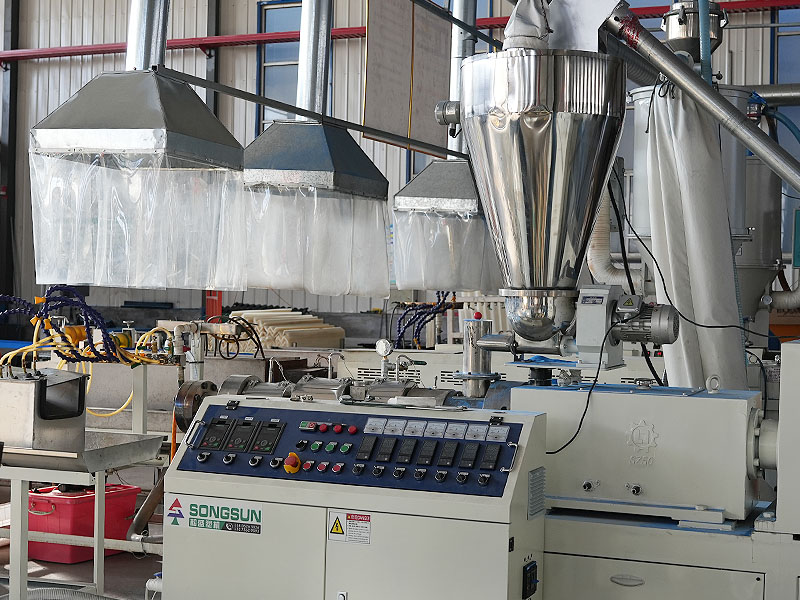
Hi friend, there is a cooling tower packing processing factory here, which has various specifications of cooling tower packing and can also be customized according to your requirements. Are you sure you don't want to come and take a look
Copyright © 2026.Company cooling tower fill factory All rights reserved.