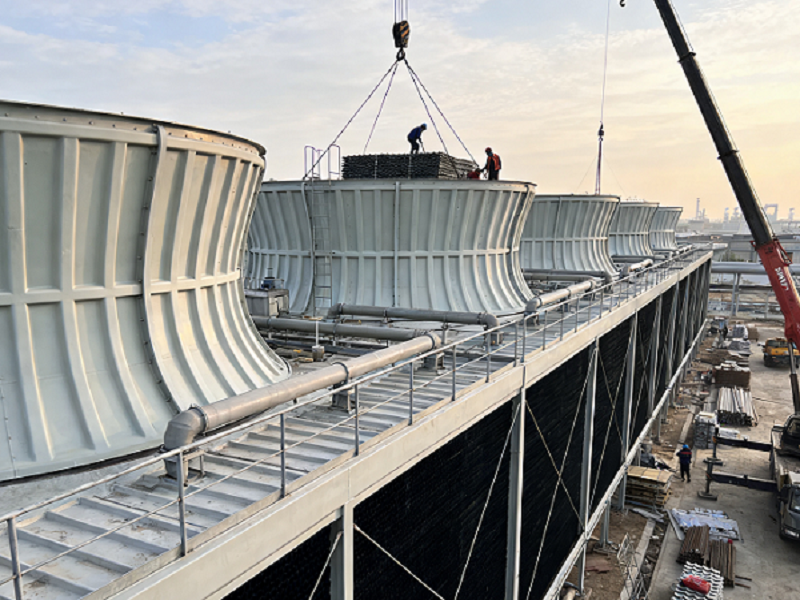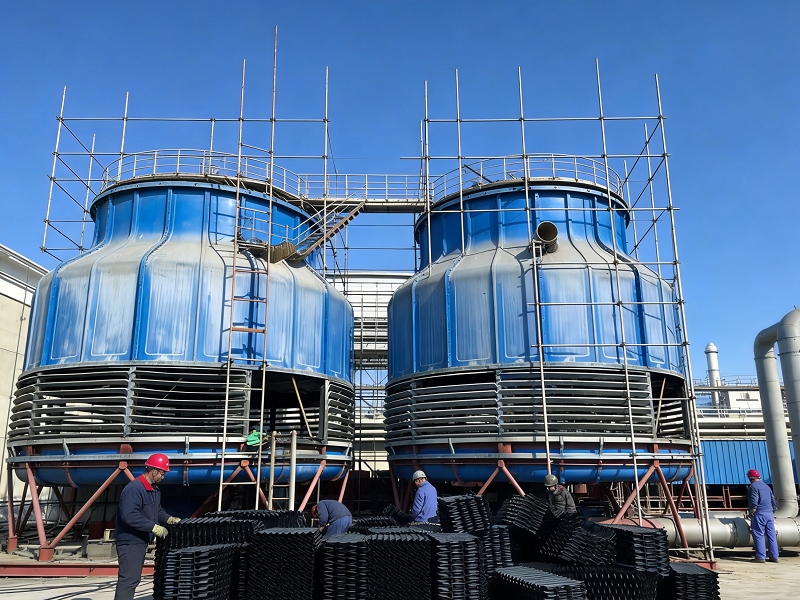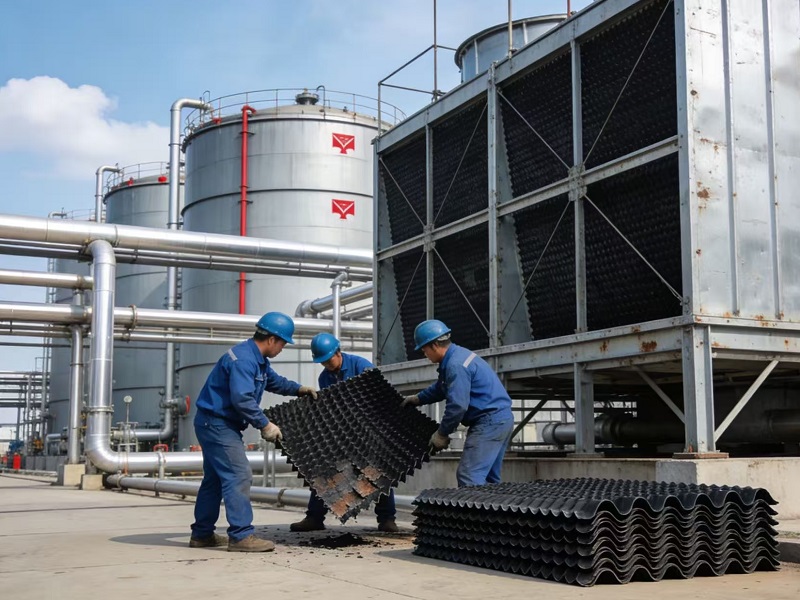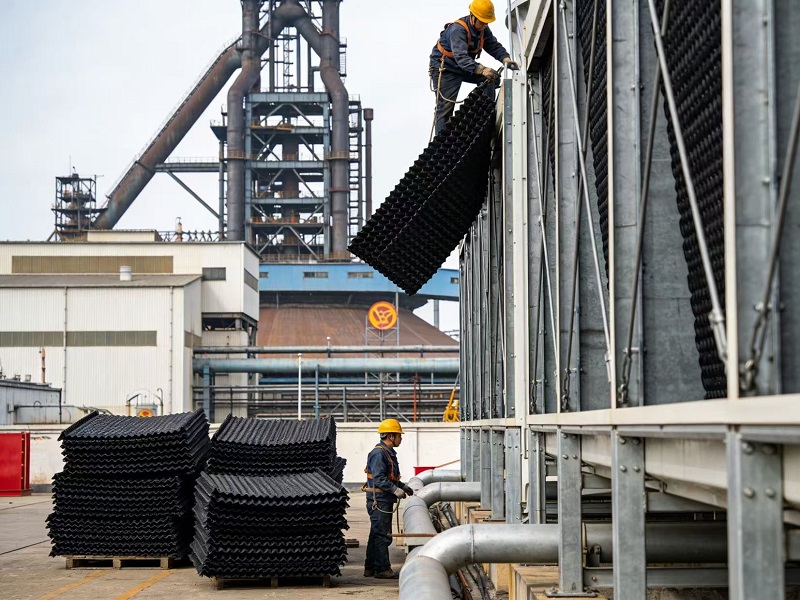
Cooling towers are designed to operate for many years, but some internal components may gradually lose performance after long-term operation. Among these components, cooling tower fill media is one of the parts that has a direct influence on heat transfer efficiency.
When cooling performance decreases, many engineers first check fans, pumps, and water distribution systems. However, aged or damaged fill media is also a common reason behind reduced cooling efficiency.
Replacing old fill media can be an effective way to improve cooling tower performance without replacing the entire cooling system.
This guide explains when cooling tower fill replacement is needed, how to choose suitable replacement materials, and what factors should be considered during a retrofit project.
For industrial users looking for a practical upgrade solution, selecting the correct cooling tower fill is an important step toward improving system reliability.
Cooling tower fill media works continuously under conditions involving water flow, airflow, temperature changes, and chemical exposure.
Over years of operation, the fill structure may experience gradual performance decline.
Common reasons for replacement include:
Even if the cooling tower structure remains in good condition, outdated fill media may limit the overall system performance.
Knowing when to replace cooling tower fill can help companies avoid unnecessary energy consumption and production issues.
One of the most common signs is that the cooling tower cannot achieve the expected outlet water temperature.
Possible reasons include:
If cleaning and maintenance cannot restore performance, replacement may become a better option.
During inspection, engineers may find:
Physical damage can affect airflow and water distribution, reducing cooling efficiency.
If the cooling tower requires frequent cleaning but performance continues to decline, the fill media may have reached the end of its practical service life.
Aging fill may force cooling systems to operate longer or harder to achieve the same cooling effect.
This may lead to:
Cooling tower fill operates in a continuously wet environment.
Although modern plastic materials are designed for durability, long-term exposure may still affect physical properties depending on operating conditions.
Water quality has a major impact on fill service life.
Problems such as high mineral concentration, uncontrolled biological growth, and excessive suspended solids may accelerate fill deterioration.
Some industrial applications operate under elevated temperature conditions.
In these cases, selecting a suitable material is important because different plastics have different temperature resistance characteristics.
A successful replacement project requires more than simply selecting a new product with the same size.
Engineers should evaluate:
Film Fill is widely used in modern cooling tower systems because of its efficient heat transfer structure.
The design creates a large contact area between water and air, improving the cooling process.
When replacing old fill with a new film fill cooling tower solution, engineers usually consider:
Film Fill replacement is commonly used in industrial cooling tower upgrades where improved heat exchange performance is required.
PVC is one of the most commonly used materials for cooling tower fill.
PVC fill media is often selected for:
Advantages of PVC cooling tower fill include:
For normal operating environments, PVC remains a widely accepted choice.
PP material is often considered when operating conditions are more demanding.
PP cooling tower fill may be suitable for applications requiring:
Industries such as chemical processing and power generation may evaluate PP materials based on their specific requirements.
Before replacement, engineers should inspect:
This helps determine whether replacement alone can solve the performance issue.
The replacement fill should match the original cooling tower design.
Important parameters include:
Old fill should be removed carefully to avoid damaging supporting structures.
During removal, engineers should also check for hidden problems inside the tower.
Proper installation is important because incorrect positioning may affect airflow and water distribution.
The new fill should be installed according to the cooling tower design requirements.
After installation, system performance should be checked.
Typical inspection items include:
When cooling performance decreases, some companies consider replacing the entire cooling tower.
However, cooling tower fill replacement may be a practical alternative in many situations.
| Item | Fill Replacement | New Cooling Tower |
|---|---|---|
| Project cost | Usually lower | Higher investment |
| Installation time | Shorter | Usually longer |
| Existing structure usage | Can continue using tower body | Requires new equipment |
| Suitable situation | Internal components aging | Complete system upgrade |
For many industrial facilities, upgrading internal components can provide a practical improvement without major reconstruction.
Power plants require reliable cooling systems because cooling interruption may affect production stability.
Fill replacement projects usually focus on:
Petrochemical facilities often operate under complex conditions.
Important considerations include:
Manufacturing plants often choose retrofit solutions to improve cooling performance while reducing downtime.
A fill replacement project is also a good opportunity to inspect other cooling tower components.
Airflow is important for cooling performance.
A damaged or blocked Air intake grille may affect the cooling process.
Water loss control is becoming increasingly important for industrial cooling systems.
Checking the condition of the Water Collector during retrofit projects can help improve overall system efficiency.
Many industrial facilities in Southeast Asia operate cooling towers under hot and humid conditions.
Common retrofit reasons include:
Replacing aging fill media can help extend the useful life of existing cooling systems.
Cooling towers in the Middle East often face high temperature conditions and strong cooling demand.
Retrofit projects commonly focus on:
Selecting suitable materials and designs is important for long-term operation in hot climates.
Cooling tower fill replacement is a practical solution for many industrial facilities that want to improve cooling performance without replacing the entire cooling system.
The key to a successful retrofit project is understanding the current operating condition, selecting suitable materials, and ensuring proper installation.
Whether choosing PVC or PP materials, the correct cooling tower fill media can help improve cooling efficiency and support long-term operation.
For aging cooling towers, a well-planned fill replacement project can provide a reliable path toward better performance and improved system management.
Prev Post:Cooling Tower Fill Media Comparison For Different Industrial Applications
Next Post: No next
Precision design for efficient heat exchange. Improves cooling efficiency and reduces operating energy consumption.
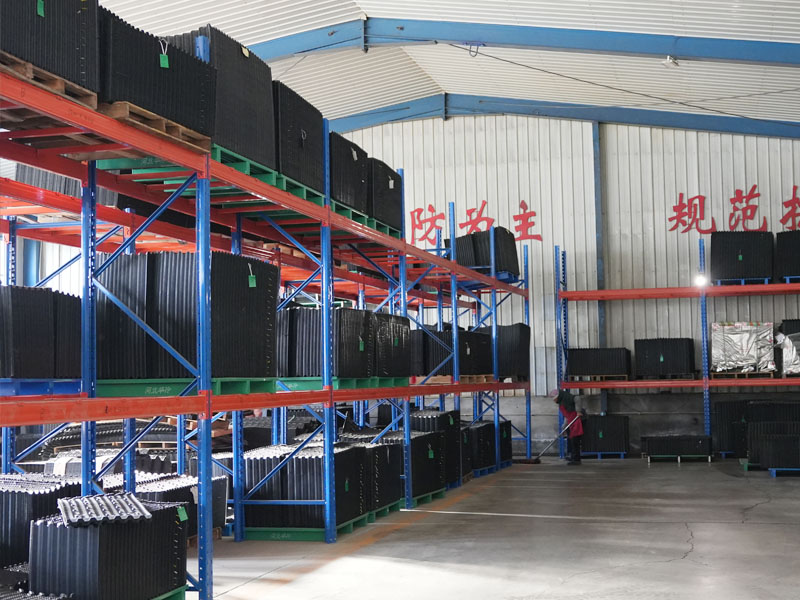
We have a large supermarket stock of cooling tower packing materials, with a variety of product specifications.
Provide customized cooling tower packing solutions to accurately match the needs of different brands of cooling tower projects.
Our experienced team provides comprehensive technical support to ensure timely and high-quality delivery of cooling tower packing orders.

The cooling tower fill from this supplier has significantly improved our system's efficiency. Installation was straightforward, and we've noticed a consistent temperature drop since switching to their product.
Plant Manager

Durability was our main concern, and this fill material has held up exceptionally well even in harsh conditions. It has reduced our maintenance cycles and downtime.
Operations Director

We needed a drop-in replacement for an older system. Their technical support helped us select the right fill, and the performance has exceeded our expectations.
Facilities Engineer

The fill blocks arrived well-packed and were easy to install. Our cooling tower now runs more quietly and with better heat dissipation.
Maintenance Supervisor

Hi friend, there is a cooling tower packing processing factory here, which has various specifications of cooling tower packing and can also be customized according to your requirements. Are you sure you don't want to come and take a look
Copyright © 2026.Company cooling tower fill factory All rights reserved.