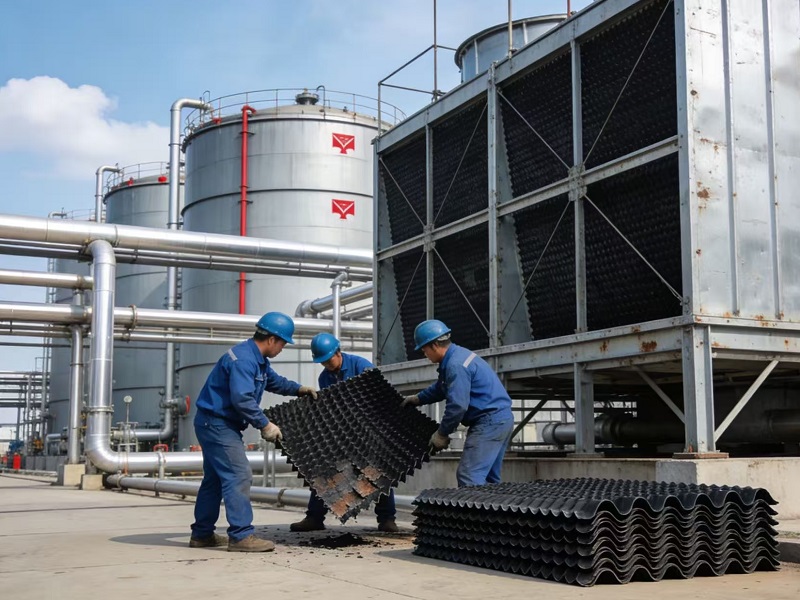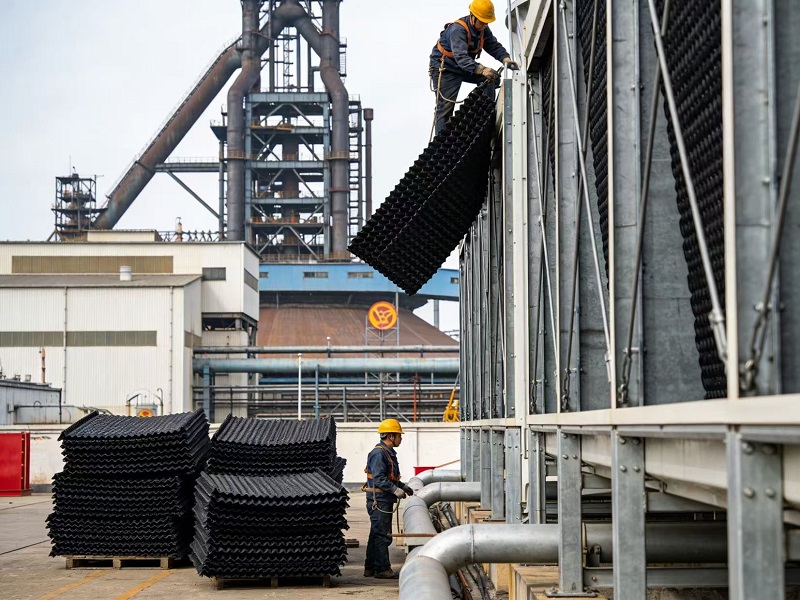
In industrial cooling tower operation, water distribution quality directly affects heat transfer performance. Even when a cooling tower is equipped with advanced equipment, poor water distribution can reduce the actual working efficiency of Cooling Fill.
For industrial customers in Southeast Asia, the Middle East, and Japan Korea markets, cooling towers often operate under unstable conditions caused by seasonal temperature changes, production load variation, and different water sources. In these situations, Cooling Tower Media must work together with the distribution system to achieve consistent cooling performance.
From years of engineering experience, many cooling tower efficiency problems are not caused by insufficient fill performance, but by uneven water coverage. A good tower fill system requires proper water distribution to fully use its heat exchange surface.
Cooling Tower Media depends on uniform water spreading to create effective heat exchange. When water covers the fill surface evenly, every section can participate in cooling.
If some areas receive too much water while other areas remain dry, the cooling tower cannot achieve balanced performance.
Poor water distribution may result in:
For this reason, water distribution is considered one of the key design factors when selecting Cooling Tower Media.
Blocked nozzles are one of the most common causes of uneven water coverage.
When debris, scale, or biological deposits accumulate inside the nozzle, some areas of Cooling Fill may receive insufficient water.
The distribution system requires suitable pressure conditions to achieve uniform spraying.
Too much or too little pressure can affect the water pattern and reduce the effectiveness of cooling tower infill.
Uneven pipe layout may cause different sections of the cooling tower to receive different water volumes.
This problem is often found during system expansion or when old cooling towers are modified.
High levels of suspended solids and minerals can gradually affect distribution performance.
Deposits may block small passages and reduce the stability of water flow.
Film Fill requires relatively uniform water distribution because it depends on continuous water film formation across the surface.
When water coverage is consistent, Film Fill can provide excellent heat transfer efficiency.
Splash fill breaks water into droplets through repeated impact.
This structure provides better tolerance when water distribution is not perfectly uniform and is often selected for more challenging applications.
Corrugated Fill uses wave-shaped structures to improve turbulence and increase air-water contact.
Proper distribution allows the corrugated surface to achieve better cooling performance.
CrossFluted Fill creates crossing channels that improve water spreading and airflow interaction.
This design is widely used in industrial cooling applications because of its balance between efficiency and stability.
PVC film fill is commonly used because of its reliable performance and cost efficiency.
When operating with properly treated water, PVC can maintain stable water film formation over long periods.
PP fill media offers better resistance to temperature changes and chemical environments.
It is suitable for industrial applications where operating conditions are more demanding.
Improving water distribution requires cooperation between fill selection, hydraulic design, and regular maintenance.
Additional water management components can also improve overall cooling performance:
In real industrial applications, uneven water distribution can create hidden problems that are difficult to notice during daily operation.
These issues are especially important for factories that require continuous cooling, such as power plants, chemical facilities, and manufacturing industries.
Preventive maintenance is usually more economical than repairing cooling problems after efficiency has already dropped.
A food factory noticed uneven cooling performance between different sections of the tower. Inspection found several blocked nozzles causing dry areas inside the Cooling Tower Media. After cleaning the distribution system, cooling performance improved and outlet temperature became more stable.
A refinery operating under high ambient temperature conditions experienced unstable cooling during summer. Engineers found that uneven water coverage reduced the effectiveness of the Industrial Tower Fill. After adjusting the distribution system, the cooling tower achieved more consistent operation.
A production plant using recycled water suffered from repeated distribution problems. The engineering team improved filtration, adjusted water flow balance, and selected a more suitable tower fill structure. The system maintenance cycle became longer after optimization.
When purchasing replacement materials, engineers should evaluate whether the supplier understands actual cooling conditions.
A professional cooling tower fill supplier should consider:
For companies searching for a cooling tower fill replacement supplier, technical matching is often more important than simply comparing product prices.
Modern industrial cooling systems are moving toward higher efficiency and lower operating costs.
Future tower fill designs focus on:
These improvements help industrial users achieve more stable cooling performance under changing operating conditions.
Water distribution plays a critical role in Cooling Tower Fill performance. Without uniform water coverage, even high-efficiency fill materials cannot achieve their full potential.
By improving hydraulic balance, maintaining distribution components, and selecting suitable Cooling Tower Media, industrial users can reduce energy consumption and improve cooling reliability.
For customers looking for cooling tower infill solutions, evaluating the complete cooling system rather than only the fill material is the best approach.
Uniform water distribution allows the entire fill surface to participate in heat exchange.
Blocked nozzles, poor pipe design, pressure problems, and water quality issues are common causes.
Long-term uneven operation can reduce efficiency and create localized aging problems.
Splash fill generally provides better tolerance in difficult water environments.
Inspection frequency depends on operating conditions, water quality, and system importance.
This article is written from the perspective of an industrial cooling system engineer with more than 10 years of experience in Cooling Tower Fill selection, hydraulic optimization, water distribution improvement, and industrial cooling system solutions.
Precision design for efficient heat exchange. Improves cooling efficiency and reduces operating energy consumption.
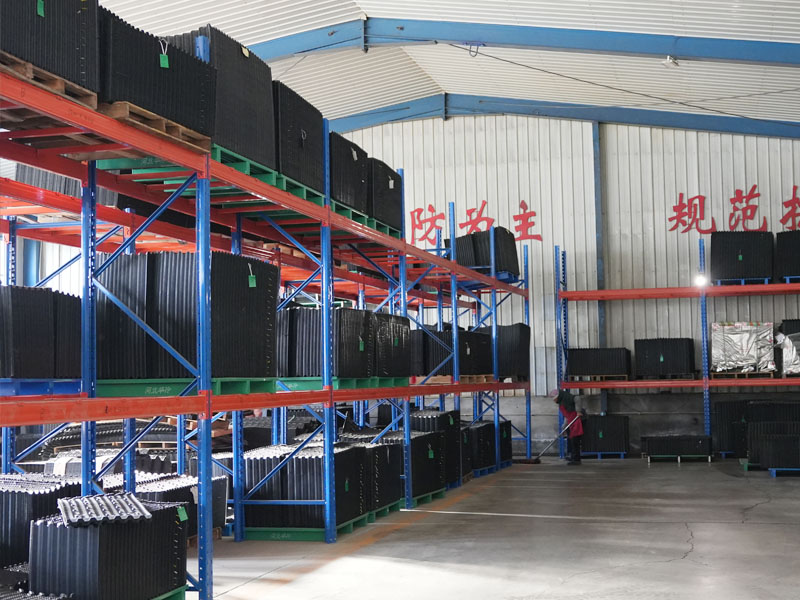
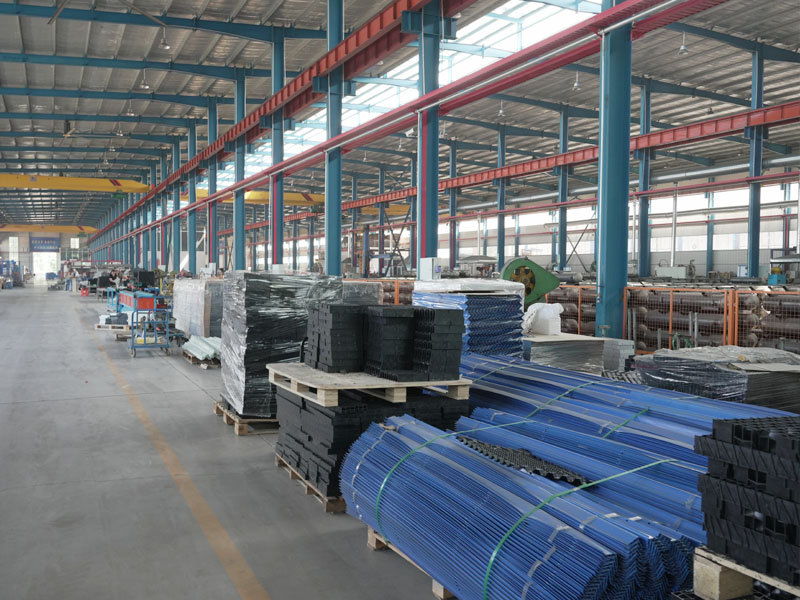
We have a large supermarket stock of cooling tower packing materials, with a variety of product specifications.
Provide customized cooling tower packing solutions to accurately match the needs of different brands of cooling tower projects.
Our experienced team provides comprehensive technical support to ensure timely and high-quality delivery of cooling tower packing orders.

The cooling tower fill from this supplier has significantly improved our system's efficiency. Installation was straightforward, and we've noticed a consistent temperature drop since switching to their product.
Plant Manager

Durability was our main concern, and this fill material has held up exceptionally well even in harsh conditions. It has reduced our maintenance cycles and downtime.
Operations Director

We needed a drop-in replacement for an older system. Their technical support helped us select the right fill, and the performance has exceeded our expectations.
Facilities Engineer

The fill blocks arrived well-packed and were easy to install. Our cooling tower now runs more quietly and with better heat dissipation.
Maintenance Supervisor

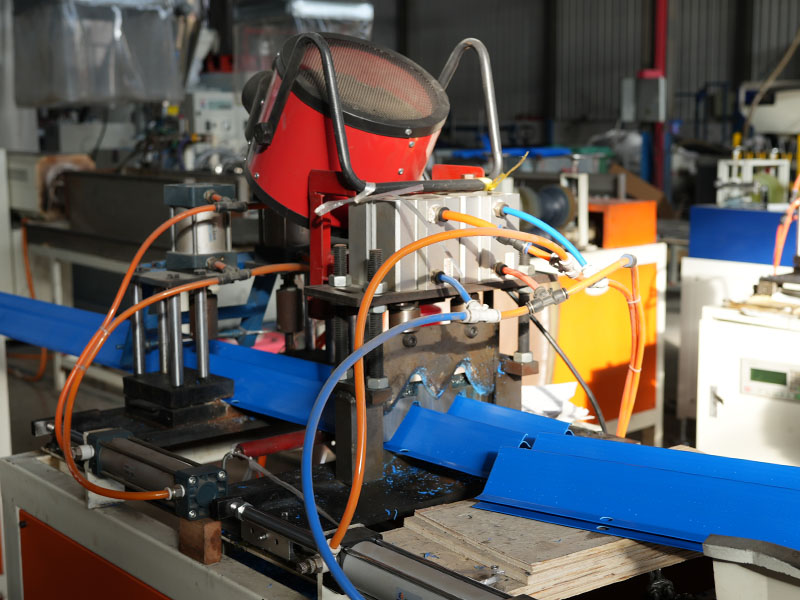
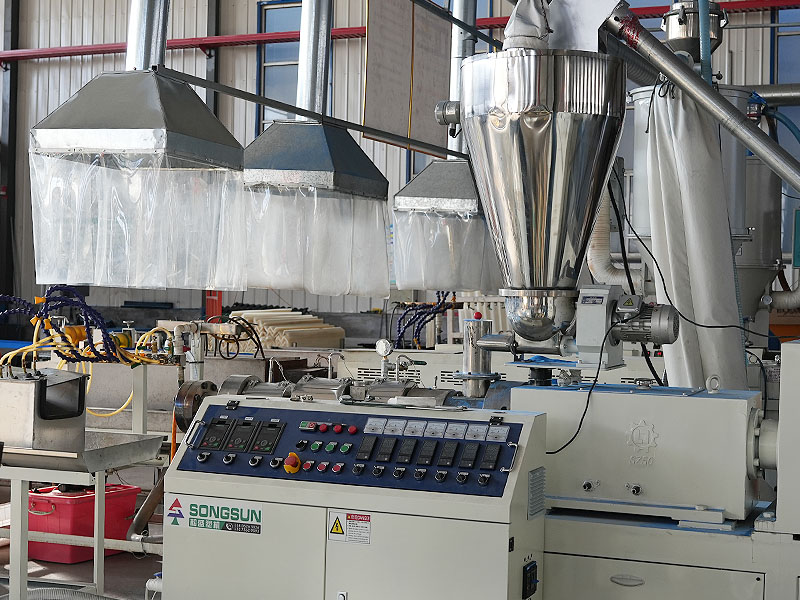
Hi friend, there is a cooling tower packing processing factory here, which has various specifications of cooling tower packing and can also be customized according to your requirements. Are you sure you don't want to come and take a look
Copyright © 2026.Company cooling tower fill factory All rights reserved.