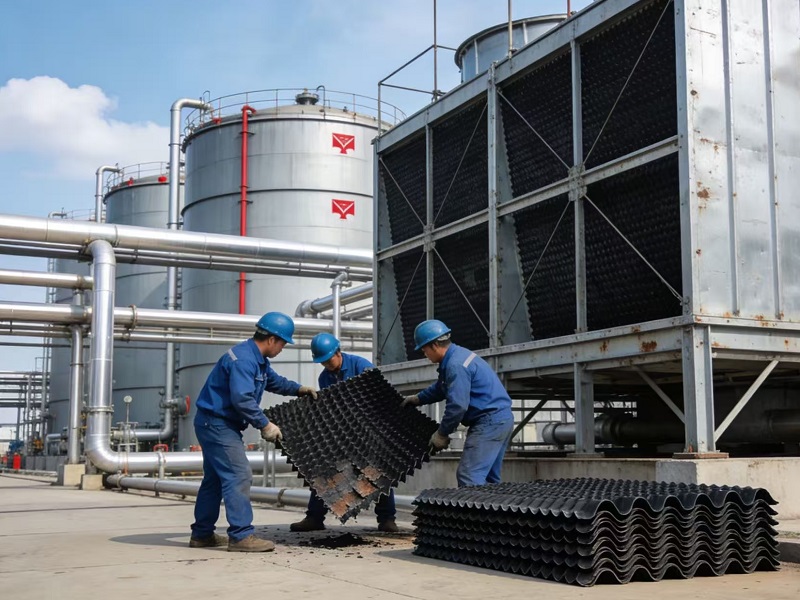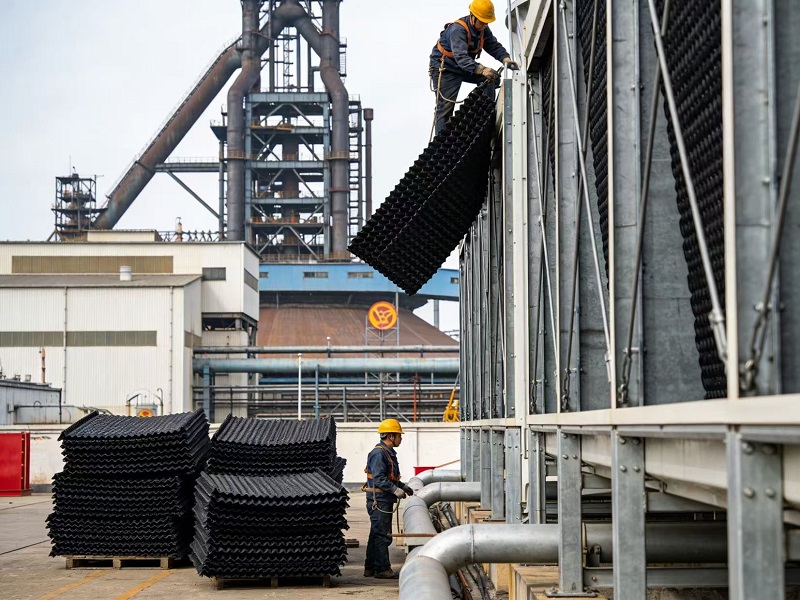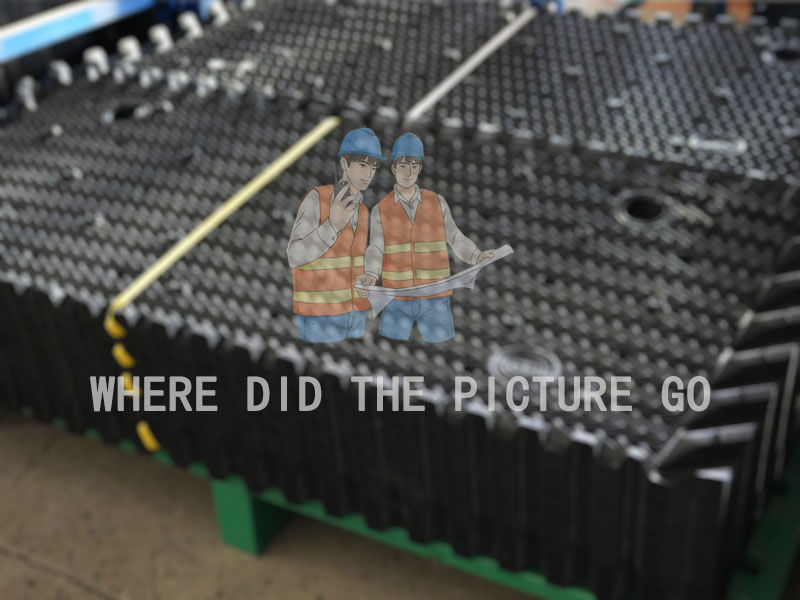
When engineers talk about cooling tower performance, many people first think about the fan, motor, pump, or water flow system. However, inside the cooling tower, one component plays a very important role in heat transfer efficiency — the fill media.
Cooling tower fill media is the internal component that creates a large contact area between air and water. By spreading the water into thin layers or small droplets, the fill helps increase evaporation and improves the cooling process. In many industrial applications, choosing the right cooling tower fill can directly affect the operating stability and maintenance requirements of the cooling system.
For engineers and maintenance teams, selecting the correct fill is not simply about replacing old parts with new ones. The tower type, water quality, operating temperature, airflow condition, and industry application all need to be considered before making a decision.
The basic working principle of a cooling tower is to remove heat from circulating water through evaporation. During this process, water needs enough contact time with air to release heat effectively.
Without suitable fill media, water will quickly fall through the tower without enough air contact. This can reduce cooling efficiency and increase energy consumption because the system may need longer operating time to achieve the required outlet water temperature.
A well-designed cooling tower fill helps to achieve several important functions:
In practical projects, many cooling tower problems are not caused by the fan or pump. Sometimes the real reason is aged, damaged, blocked, or incorrectly selected fill media.
Cooling tower fill media can generally be divided into two main categories: film fill and splash fill. Different designs are suitable for different operating conditions.
Film fill is one of the most commonly used solutions in modern cooling towers. The design uses a series of closely arranged sheets with special surface patterns. Water flows down the surface of the sheets and forms a thin water film, while air passes through the channels.
A film fill cooling tower system is usually selected when higher heat transfer efficiency is required and the circulating water quality is relatively clean.
The main features of Film Fill include:
Film fill is widely used in counterflow cooling towers and crossflow cooling towers. It can be manufactured with different flute designs and sheet thicknesses depending on airflow requirements and operating conditions.
Splash fill works differently from film fill. Instead of creating a continuous water film, splash fill uses specially designed bars or grids to break water into smaller droplets.
This type of fill is often used in applications where water contains more suspended solids or where blockage prevention is an important consideration.
Typical applications include:
Compared with film fill, splash fill usually has a more open structure, which can help reduce clogging risks in challenging environments.
The material selection of cooling tower packing has a direct influence on service life, temperature resistance, chemical resistance, and maintenance requirements.
PVC is one of the traditional materials used for cooling tower fill media. It has been widely used because of its stable performance and suitability for normal operating temperatures.
PVC cooling tower packing is commonly found in:
PVC materials are usually selected when the operating environment does not require extremely high temperature resistance.
Polypropylene (PP) is another popular material for modern cooling applications. Compared with traditional PVC materials, PP provides better temperature resistance and chemical stability in certain environments.
PP cooling fill is often considered for industrial projects where operating conditions are more demanding.
Typical advantages of PP material include:
Different industries have different cooling requirements. A fill design that works well in one project may not always be suitable for another application.
Power plants usually operate large cooling systems continuously. The fill media needs to maintain stable heat transfer performance under long operating hours.
Important factors include:
Chemical industries often have special requirements because water conditions can include different chemical components and operating temperatures.
When selecting cooling tower packing for chemical applications, engineers normally consider:
HVAC cooling towers are widely used in commercial buildings, hotels, hospitals, and large facilities. These systems usually focus on stable operation, energy efficiency, and convenient maintenance.
For HVAC applications, film fill designs are commonly selected because they provide efficient heat exchange within a compact tower structure.
Choosing the correct tower fill requires more than checking the size of the existing media. Engineers usually review several important factors before replacement.
First, identify whether the system is a counterflow tower or crossflow tower. Different tower structures require different fill designs to match airflow and water distribution conditions.
Water quality is one of the most important factors. If the circulating water contains dirt, algae, suspended particles, or high mineral content, a more open structure may be more suitable.
Some industrial processes operate at higher temperatures. In these cases, material selection becomes critical because unsuitable materials may deform over time.
A good cooling solution is not only about initial performance. Maintenance frequency, cleaning methods, and replacement convenience should also be considered.
Cooling tower performance depends on the entire system. Besides fill media, several other components also influence operation efficiency.
The air intake section controls how outside air enters the cooling tower. A properly designed Air intake grille helps maintain stable airflow while reducing the risk of large particles entering the tower.
For cooling tower refurbishment projects, engineers often check the condition of both fill media and air intake components because airflow problems can affect the overall cooling result.
A Water Collector is designed to reduce water droplets carried out with exhaust air. Proper droplet control helps reduce water loss and improves environmental performance.
During cooling tower upgrades, replacing aging fill media together with other internal components can help improve overall system reliability.
In real projects, some cooling tower issues are related to incorrect fill selection rather than equipment failure.
If the fill does not provide enough contact area between air and water, the tower may not achieve the expected cooling temperature.
A fill design with unsuitable airflow resistance may increase fan load and affect operating efficiency.
Using a compact film fill design in a water system with heavy contamination may lead to faster blockage and increased cleaning requirements.
In recent years, industrial users in Southeast Asia, the Middle East, Japan, and Korea have shown increasing interest in efficient cooling solutions.
Hot climates, expanding manufacturing industries, and higher requirements for energy management are driving companies to pay more attention to cooling tower internal components.
For many industrial users, upgrading old Film Fill systems has become a practical way to improve cooling performance without replacing the entire cooling tower structure.
Cooling tower fill media may look like a simple plastic component, but it plays a key role inside the cooling system. The right choice depends on many factors including tower design, water quality, operating temperature, and industry requirements.
Whether you are replacing old tower fill, upgrading an existing cooling tower, or designing a new cooling system, understanding the differences between film fill, splash fill, materials, and applications will help you make a more suitable decision.
A successful cooling tower project is usually not about choosing the most complicated solution. It is about selecting the fill media that matches the actual working conditions.
Precision design for efficient heat exchange. Improves cooling efficiency and reduces operating energy consumption.
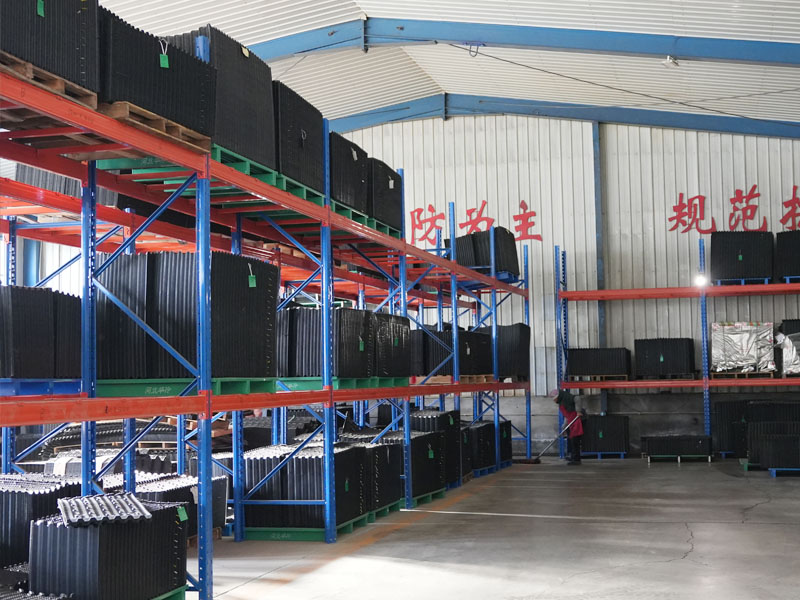
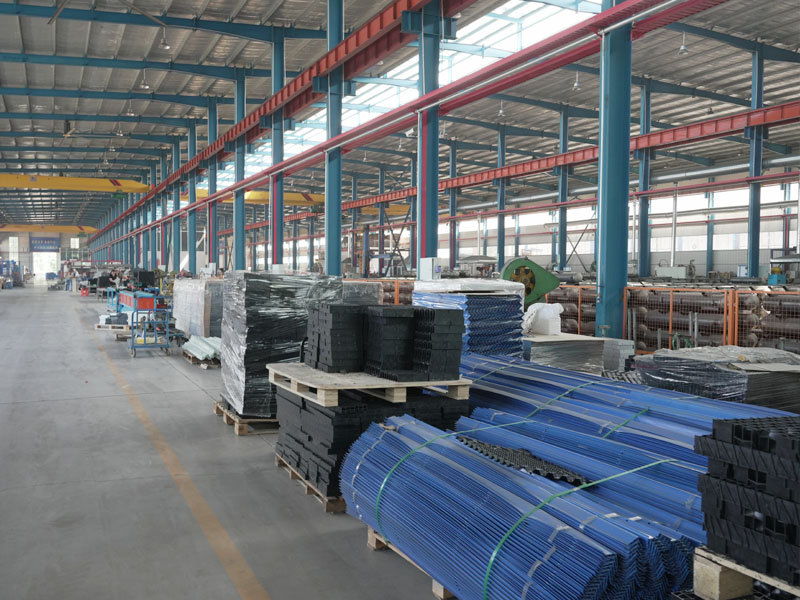
We have a large supermarket stock of cooling tower packing materials, with a variety of product specifications.
Provide customized cooling tower packing solutions to accurately match the needs of different brands of cooling tower projects.
Our experienced team provides comprehensive technical support to ensure timely and high-quality delivery of cooling tower packing orders.

The cooling tower fill from this supplier has significantly improved our system's efficiency. Installation was straightforward, and we've noticed a consistent temperature drop since switching to their product.
Plant Manager

Durability was our main concern, and this fill material has held up exceptionally well even in harsh conditions. It has reduced our maintenance cycles and downtime.
Operations Director

We needed a drop-in replacement for an older system. Their technical support helped us select the right fill, and the performance has exceeded our expectations.
Facilities Engineer

The fill blocks arrived well-packed and were easy to install. Our cooling tower now runs more quietly and with better heat dissipation.
Maintenance Supervisor

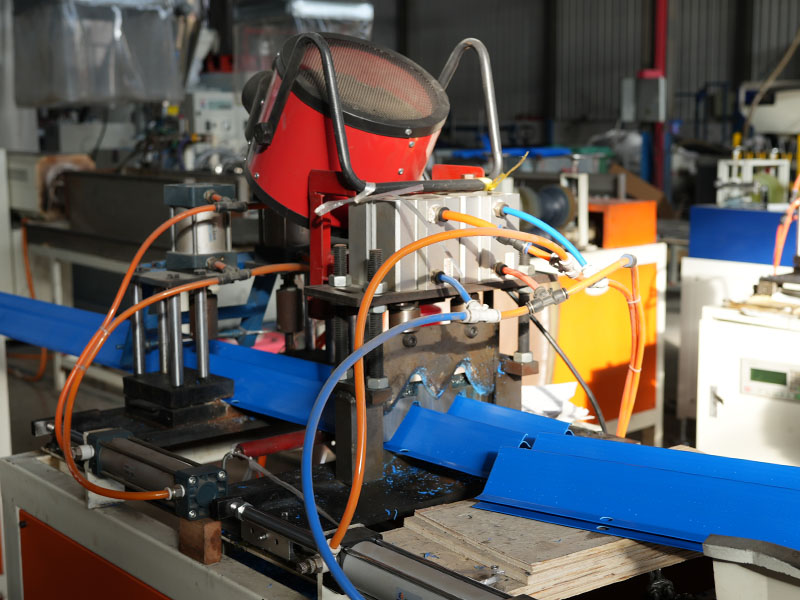
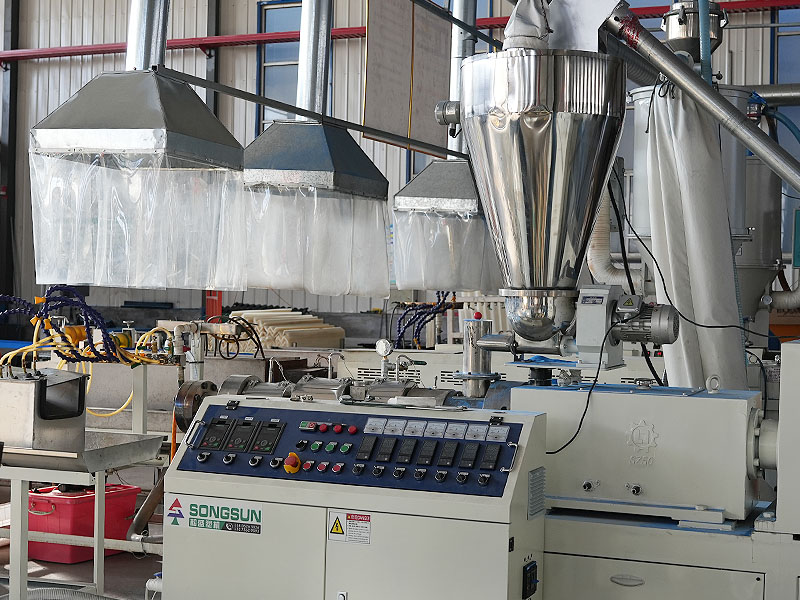
Hi friend, there is a cooling tower packing processing factory here, which has various specifications of cooling tower packing and can also be customized according to your requirements. Are you sure you don't want to come and take a look
Copyright © 2026.Company cooling tower fill factory All rights reserved.