How film fill works
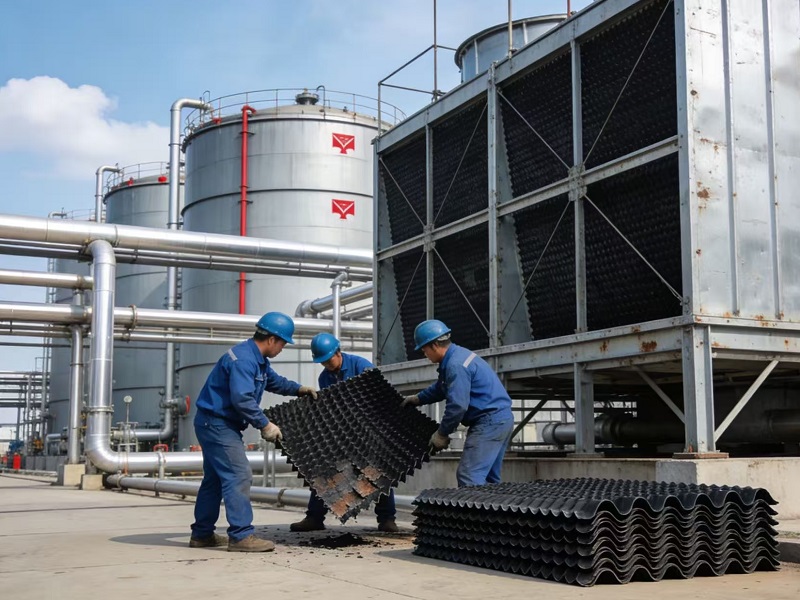
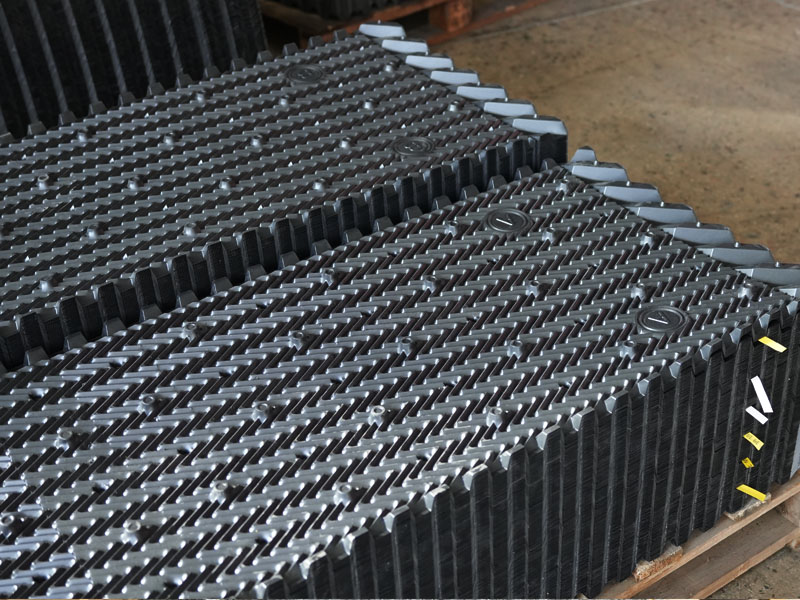
Film fill is made of thin plastic sheets with an embossed surface. Water spreads into a thin film on those sheets, creating huge surface area. Air flows between the sheets and the combination of thin water film + moving air creates very effective evaporative cooling.
Common geometries
- Cross-fluted — channels alternate direction every sheet; good dispersion.
- Vertical fluted — mostly vertical water paths; lower fouling for some conditions.
- S-Corrugated — engineered crest height and corrugation to increase surface area without raising air resistance.
Why film fill gives better cooling (and when to avoid it)
Film fill packs lots of effective surface area into a small volume — so for the same fan power you can get colder water, or for the same cold-water target you can often reduce fan power. But film fill needs reasonably clean water: if the water carries lots of solids, scale or biological growth, film sheets can clog more quickly than splash fills.
Performance notes for tropical climates
In Southeast Asia, higher ambient wet-bulb temperatures reduce the theoretical minimum temperature a tower can reach — so efficiency per cubic meter of fill matters. Proper water treatment (scale inhibitors, microbiological control) plus periodic maintenance will keep film fill delivering top performance.
Installation and joints
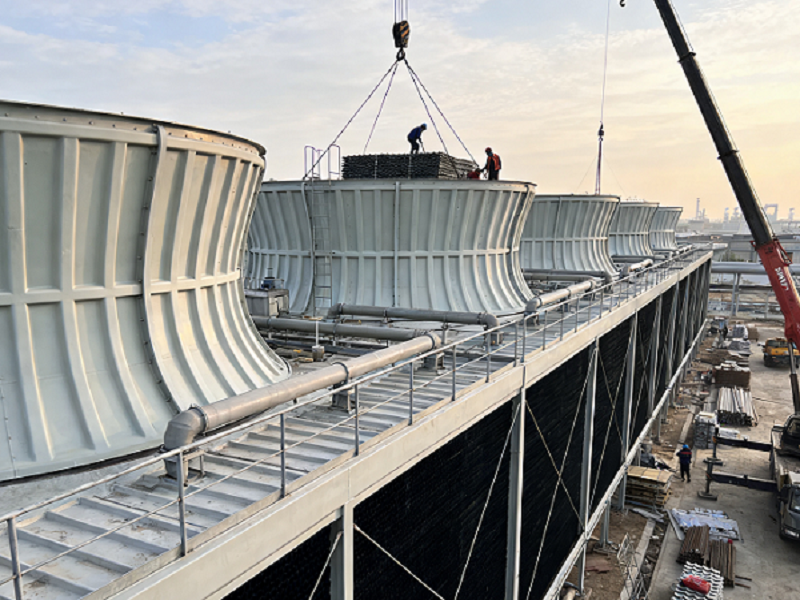
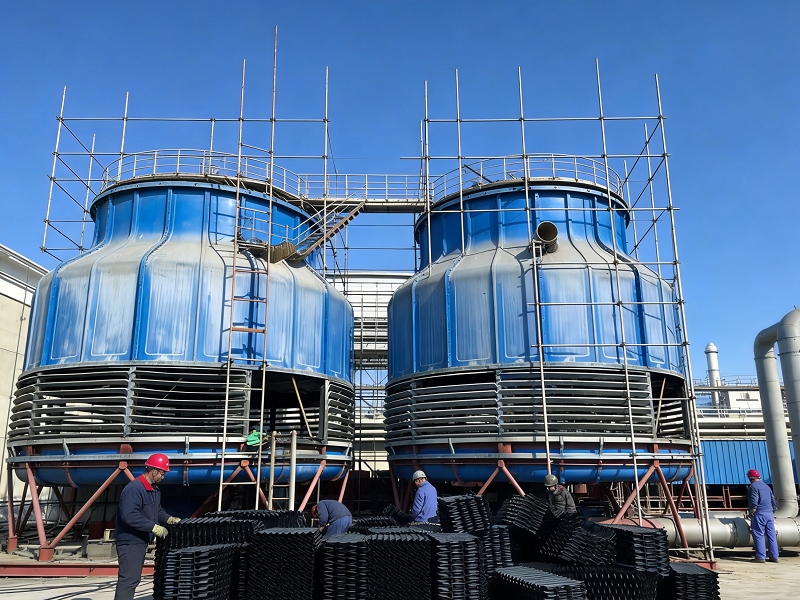
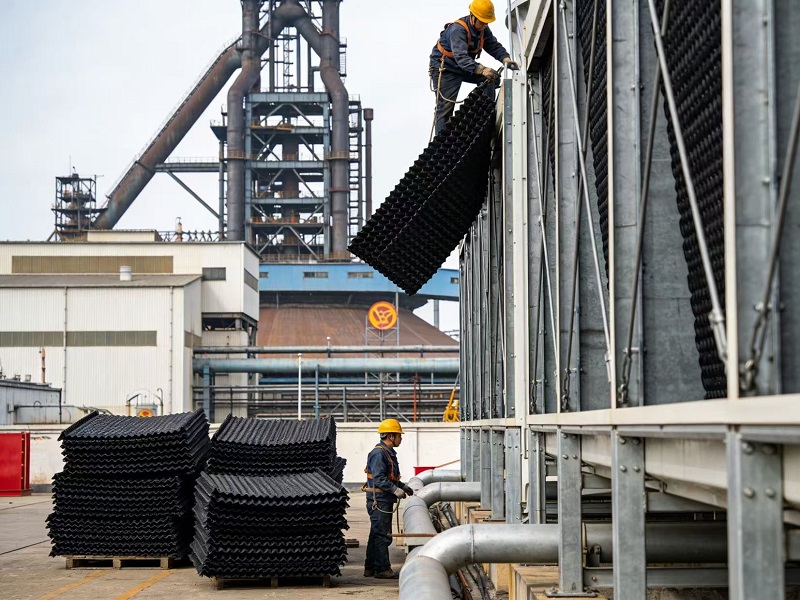
Film fill modules need good water distribution and careful joint sealing. Gaps let water bypass the media or create channels where the fill dries unevenly. We provide packing plans and can pre-cut modules to match your cell dimensions.
Maintenance: what to watch for
Watch for discolored sheets (sign of scale), algae in warm wet sections, and sagging or deformation from heat or chemical attack. Rinse with low-pressure water; chemical cleaning is possible but choose compatible chemistries for PVC/PP.
Short case note: matched components
When you upgrade fill, consider matching components — a proper Cooling tower water collector and good Air intake grille can make a small system-wide performance improvement.
Bottom line
Choose film fill when water is well-treated and you need high efficiency in a compact package. If you're unsure, send a water sample report and we’ll recommend film vs splash or a hybrid approach.
Want a film-fill packing plan?
Send dimensions and water data — we’ll propose module sizes, material type (PVC/PP), and a maintenance schedule tailored for tropical conditions.