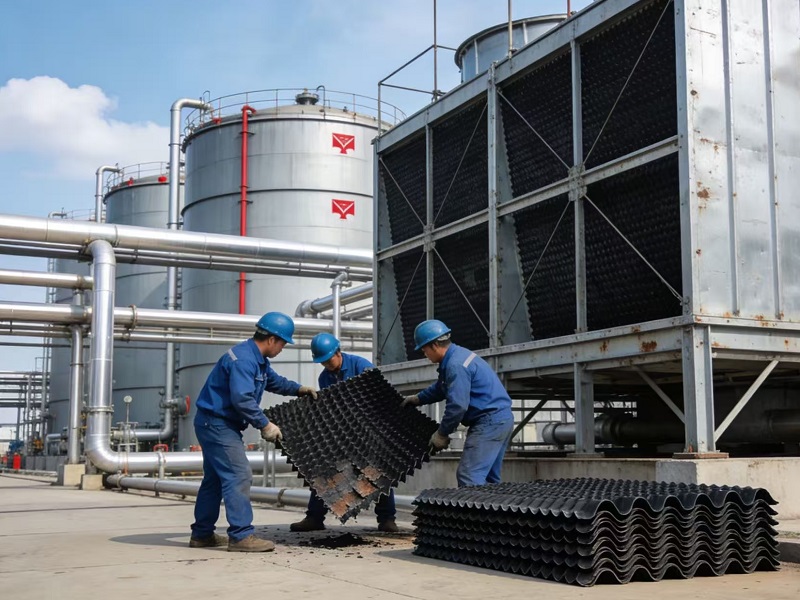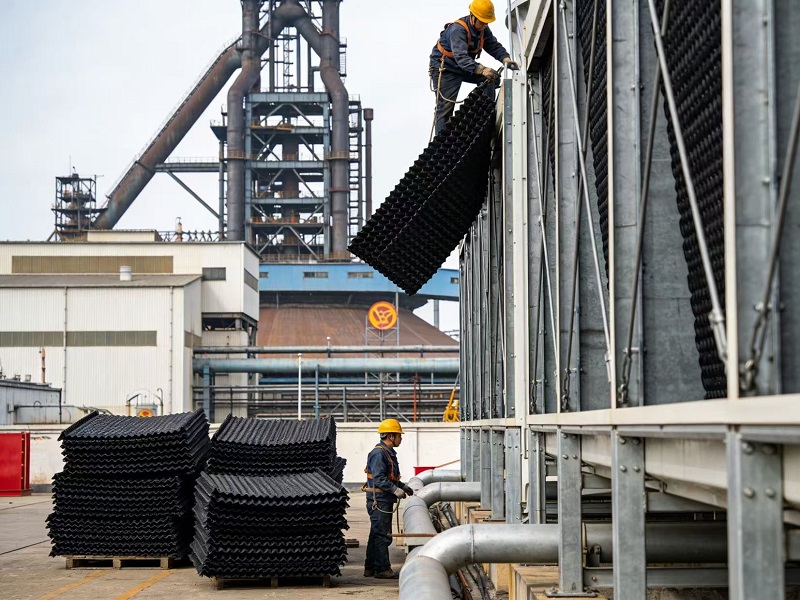
Counterflow Film Fill is a widely used type of Cooling Tower Fill in industrial and commercial cooling applications where compact footprint and high thermal performance are priorities. Unlike crossflow arrangements, counterflow film fill arranges air to move vertically upward through the media while water is distributed from the top downward, creating a direct countercurrent exchange that improves heat transfer per unit volume.
In a film fill cooling tower configured for counterflow, water is sprayed or distributed across the top of corrugated or fluted sheets. The water forms thin films along the sheet surfaces; air is drawn up through the fill from below. Because the air and water travel in opposite directions, coldest air meets warmest water near the bottom and warmer air meets cooler water near the top, which is thermodynamically favorable and improves the effectiveness of heat and mass transfer.
Counterflow film fills are normally built as vertical blocks of corrugated PVC or PP sheets. The corrugation pattern (pitch and crest height), sheet spacing and module height are tuned to balance heat transfer area, airflow resistance and fouling tolerance.
The most common materials for counterflow film fill are PVC and polypropylene (PP). PVC offers excellent wetting characteristics and is cost effective for most HVAC and light industrial applications. PP is used where higher temperatures, aggressive chemistries, or enhanced mechanical strength are required. Material additives (UV stabilizers, flame retardants) and correct sheet thickness extend service life in harsh climates.
Counterflow film fill typically delivers higher thermal performance per cubic meter than splash fill and can be more compact than some crossflow designs. Compared to crossflow film fills, counterflow fills often achieve lower approach temperatures for the same footprint, because the countercurrent arrangement is more effective at extracting heat. However, this higher efficiency can come with slightly higher air-side resistance, so fan sizing and pressure-drop must be considered in the system design.
Counterflow film fill modules are available in standard block heights and widths but are often custom cut for retrofit projects. Important sizing parameters include pack height, frontal area, specific surface (m²/m³), and free area (which affects airflow). For retrofit work, send cell dimensions and water-distribution drawings so the fill can be manufactured to minimize seams and avoid bypass.
Film fills rely on thin water films to achieve high heat transfer, so they are more sensitive to suspended solids, scale and biological growth. In tropical climates or systems using makeup water with high TDS, consider pre-filtration, side-stream filtration, or a slightly more open flute spacing to reduce fouling risk. Chemical water treatment (scale inhibitors, biocides) should be coordinated with material compatibility—PVC and PP tolerate many common chemistries, but always check with the fill manufacturer for approved treatments.
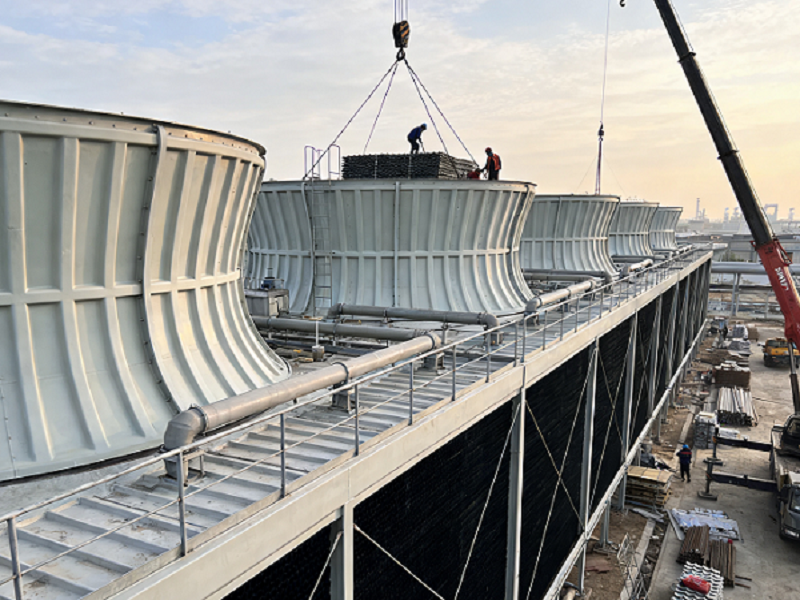
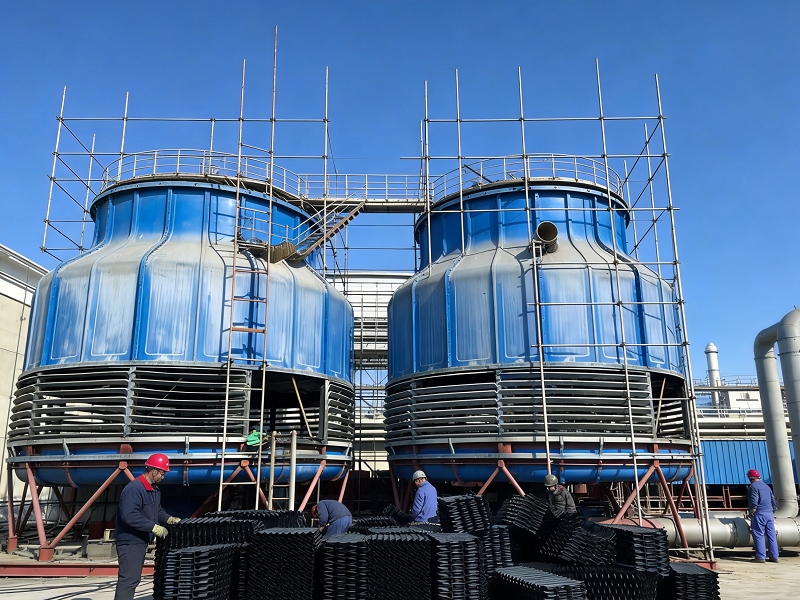
Proper installation is crucial for counterflow film fill performance. Key points:
Routine inspection, gentle low-pressure rinsing, and scheduled chemical cleaning (if compatible) will preserve the film fill’s thermal performance. Avoid high-pressure jets that deform thin PVC sheets. Monitor approach temperature and fan power—gradual drift in these metrics usually indicates fouling and signals it’s time for cleaning or spot replacement.
Counterflow film fills are commonly used in:
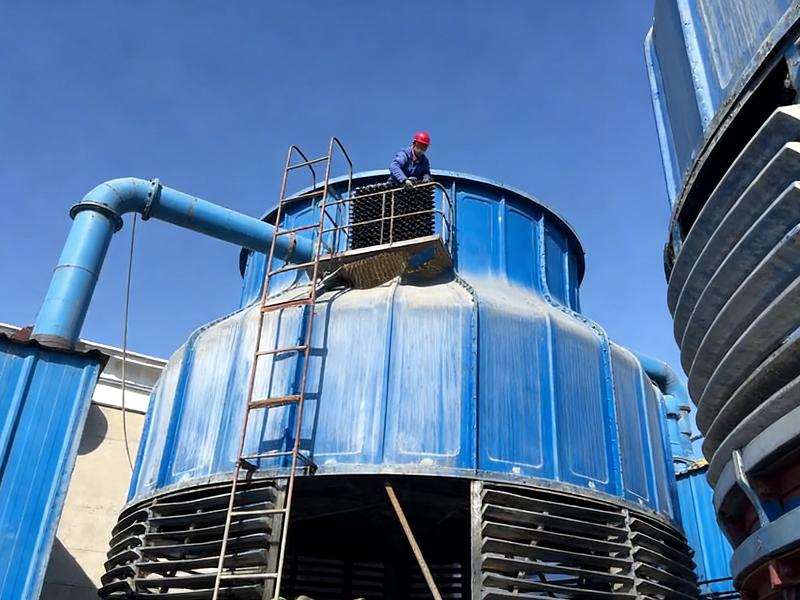
Many retrofit projects benefit from replacing old splash or degraded crossflow media with counterflow film fill when the goal is to boost capacity without enlarging the tower. In retrofit scenarios, coordinate with mechanical and structural teams to confirm fan capacity and assume small increases in pressure drop. Pre-cut modules and a clear installation sequence minimize downtime during the swap-over.
Optimal results come from treating the fill as part of a system. Matched components—like an efficient Air intake grille to stabilize incoming airflow and a correctly sized Cooling tower water collector to control drift and recover water—help the counterflow film pack perform reliably and efficiently.
Counterflow Film Fill provides an excellent balance of compactness and thermal efficiency for towers that can meet the water-quality requirements. When correctly specified, installed, and maintained, it delivers lower approach temperatures and energy savings versus many alternatives. If you are considering a performance upgrade, share your tower drawings, operating data, and water analysis so our engineers can propose a counterflow film fill option tailored to your project.
Send drawings, water data or photos and we’ll recommend module sizes, material (PVC/PP) and an installation plan to minimize downtime.
Precision design for efficient heat exchange. Improves cooling efficiency and reduces operating energy consumption.
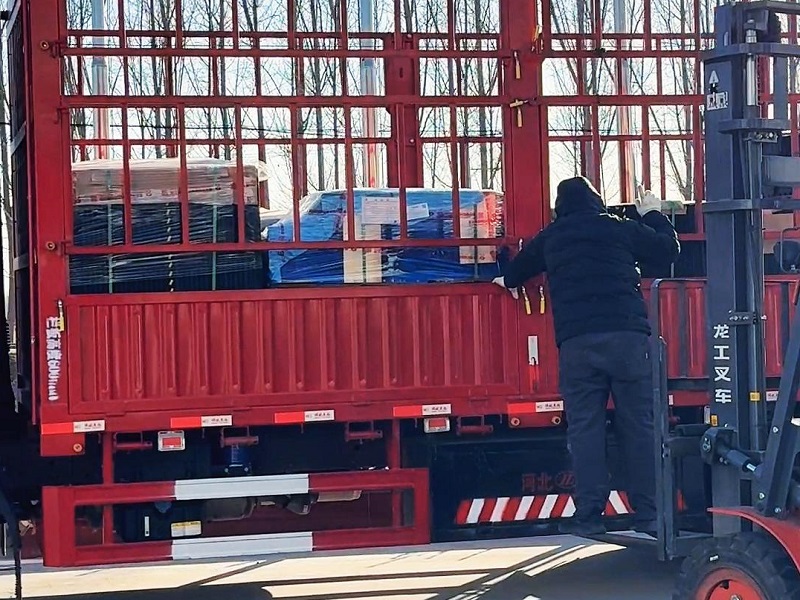
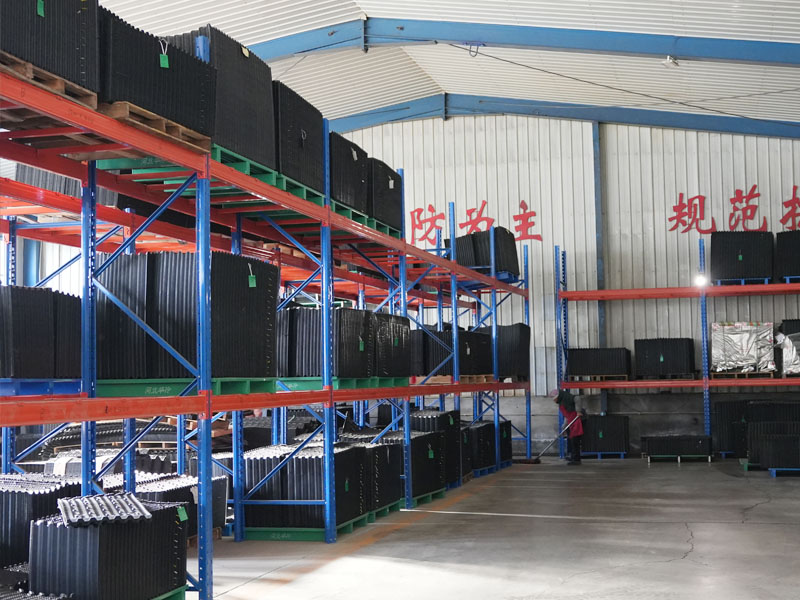
We have a large supermarket stock of cooling tower packing materials, with a variety of product specifications.
Provide customized cooling tower packing solutions to accurately match the needs of different brands of cooling tower projects.
Our experienced team provides comprehensive technical support to ensure timely and high-quality delivery of cooling tower packing orders.

The cooling tower fill from this supplier has significantly improved our system's efficiency. Installation was straightforward, and we've noticed a consistent temperature drop since switching to their product.
Plant Manager

Durability was our main concern, and this fill material has held up exceptionally well even in harsh conditions. It has reduced our maintenance cycles and downtime.
Operations Director

We needed a drop-in replacement for an older system. Their technical support helped us select the right fill, and the performance has exceeded our expectations.
Facilities Engineer

The fill blocks arrived well-packed and were easy to install. Our cooling tower now runs more quietly and with better heat dissipation.
Maintenance Supervisor

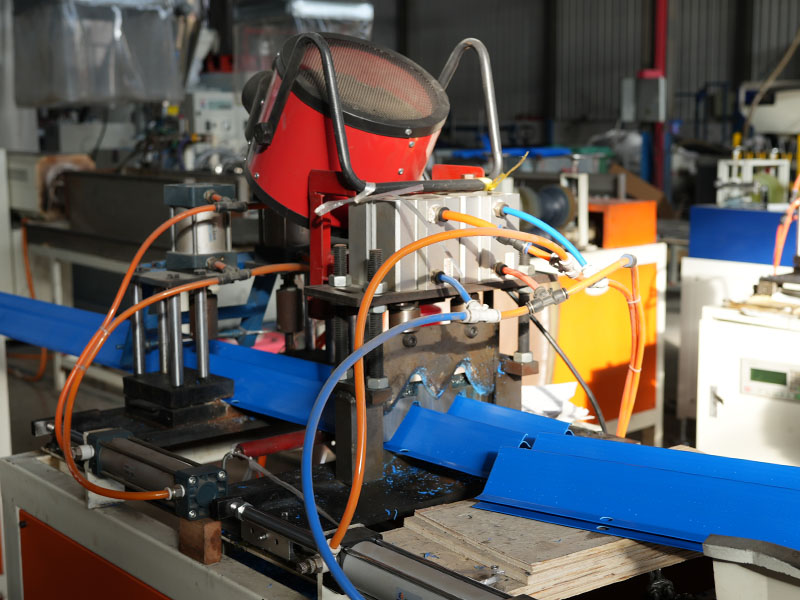
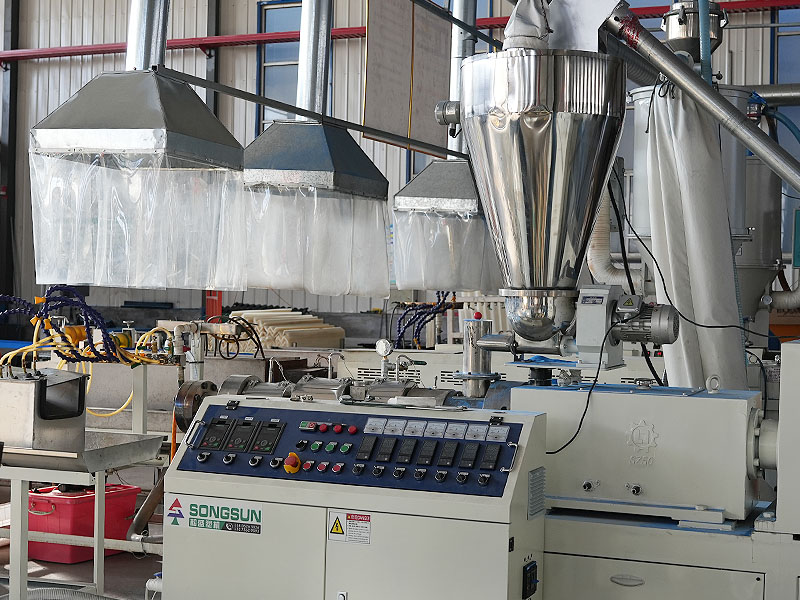
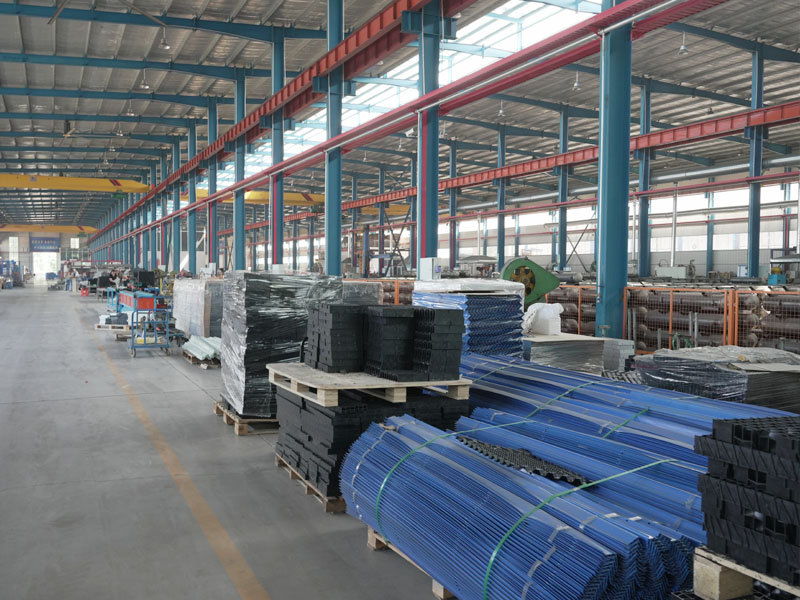
Hi friend, there is a cooling tower packing processing factory here, which has various specifications of cooling tower packing and can also be customized according to your requirements. Are you sure you don't want to come and take a look
Copyright © 2026.Company cooling tower fill factory All rights reserved.